Monday, March 28, 2011

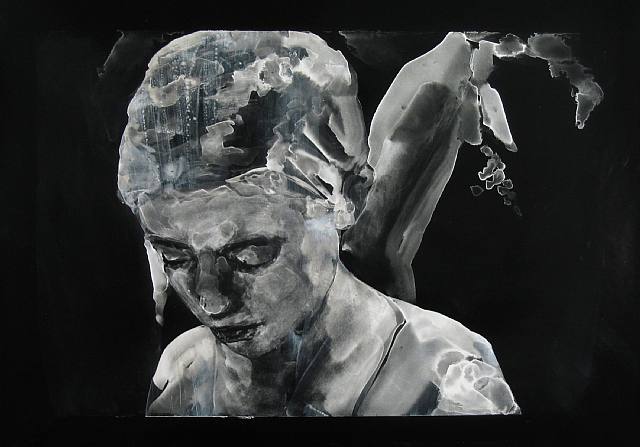
Projection Still-Life

Set-up courtesy of visiting artist, Fabian Lopez:

http://www.fabianlopez.com/


Film Series

Select a film and create a series of drawings based on it that will be installed as a grouping. The collection of drawings can relate to the overall storyline or to a specific scene of the film.

You can interpret the film however you would like through your imagery- but I encourage you to watch the film first (or again if you have seen it before) and take screenshots from it (either on your computer or with a digital camera to your television). Unlike "storyboarding," the screenshots you select do not have to show a direct sequence of events, your imagery can take a nonlinear approach to storytelling.

Use these screenshots as a sketch of your entire project. Then you can use them directly to generate drawings or create your own imagery in other ways:
-found photography that's not from the film
-create collages that reference the film
-drawings of objects or places from life that reflect something in the plot, seen or unseen

More considerations for your drawings:

As you are thinking about your images, consider the scale of each work. Does one image have a better impact if it's tiny or if it is large?

How will the pieces be installed together? These should be interesting drawings that say something individually, but when installed with other images, a bigger narrative is being told. What does it say to places two images far away from each other vs. overlapping them? What happens when one image is hung above another?

Check out these sites for film lists and imagery:

http://ilovehotdogs.net/

http://screencaps.tumblr.com/


Below are some examples of contemporary drawing artists that work with film imagery and groupings:


Matt Saunders
http://www.andreasgrimmgallery.com/artist/Artists/matt_saunders/works


Karl Haendel

http://www.harrislieberman.com/karl_haendel/karl_haendel.html


Jana Gunstheimer


Monday, March 14, 2011

Project: Patterned Self-Portrait

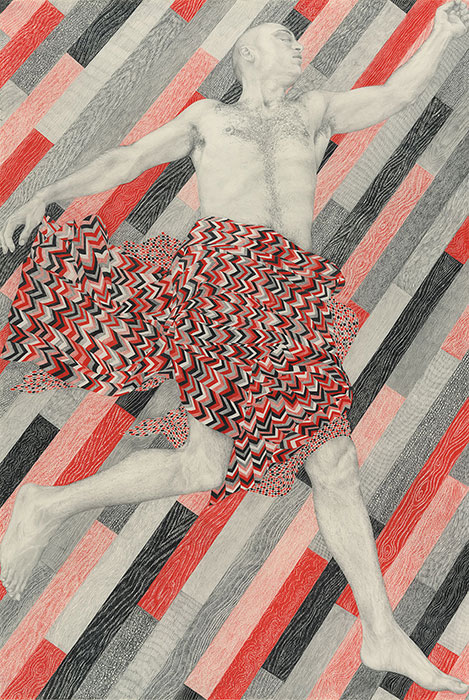
Create a life-sized or larger self-portrait drawing incorporating multiple patterns.

Interpret this anyway you'd like. The patterns can be used in the portraits' clothing or environment (see Mickalene Thomas, Hope Gangloff, Zak Smith) or it can be patterns that are imposed onto the figure like projections or tattoos (see Sarah Van Der Pols, Melissa Gill, Sebastian Bremer). The patterns can follow 3d contours (see blanket on Benjamin Degen's drawing) or they can be used to flatten forms.

Think about patterns. You could create them through simple zigzags, polka dots, stripes, or repeated mark-making. You could also research and reference textile designs or architectural elements that give a historical or cultural context. Visual patterns could also be inspired by biology, mathematics, or computer science. Use pattern to tell a story or create a mood. Will the patterns be chaotic and overwhelming, or calm and meditative?

Use whatever media you'd like, but think about incorporating color in a limited palette. Also check out the artists below and please post any more that you can think of.


Hope Gangloff

http://www.hopegangloff.com/


Mickalene Thomas
http://mickalenethomas.com/


Benjamin Degen

David Dupuis
http://www.derekeller.com/daviddupuis_work.html


Melissa Gill
http://www.melissagillart.com/Home_Page.php


Zak Smith


www.zaxart.com/


Sarah Van Der Pols
http://www.sarahvanderpols.nl/index.asp


Sebastiaan Bremer
http://www.sebastiaanbremer.com/


Monday, February 28, 2011

Project: Evolving Drawings

The idea of this project is to take a drawing through a process of photocopies and reworking, creating a collection of drawings showing a progression of evolution from the first drawing into something completely different.

1. On an 8.5 x 11" paper, draw an object in any media you'd like.

2. Take this drawing and photocopy it.

3. Take this photocopy and draw on top of it. You can use white-out, paint, collage, charcoal, ink, whatever.

4. Take this drawing and photocopy it. There are also features such as contrast and zoom on the copymachine to utilize.

5. Repeat this process until you have 10 drawings that are part photocopied, part drawing.

Throughout this process- begin thinking about the idea of time and transformation in the drawings that you are making. There will be a literal sense of this happening through the process, with evidence of the last drawing in the latest one- but also maybe the images you select to draw reflect this process. Is there a story, will there be a flipbook/animated quality to your series? Or, maybe you will you just begin the process and let the imagery come to you as you work?

I don't have any student examples, but take a look at Jenna Weiss's show at Grizzly Grizzly from a few months ago. She used this same process to create a series of abstract mixed media works.

*Note: For our class, you should start with a representational drawing, and mainly keep it representational as this is an observational drawing course. However, abstract elements and compositional strategies can be added, and your objects/figures that you draw can become abstracted through the process.


http://theartblog.org/blog/wp-content/uploaded/Jennaweissandxeroxes.jpg

After you have completed 10 drawings, take your favorite and blow it up to 22 x 30" or bigger (it will be more fun to work even larger). You can do this using the oversized black and white printer at Kinkos or Staples. Take this larger copy and rework that as well.

Artists to check out, from Andrea's visit- Shahzia Sikhander


http://www.pbs.org/art21/artists/sikander/

Artists to check out, from Andrea's visit- Paula Wilson


http://www.bellwethergallery.com/artistsindex_01.cfm?fid=440&gal=1